How to Derestrict an Electric Bike: Legal Limits, Methods, and Risks (2026)
Derestricting an e-bike means removing or bypassing the factory speed limiter so the motor keeps assisting past the legal cutoff. Most Class 1 and Class 2 e-bikes in the US cut assist at 20 mph; Class 3 cuts at 28 mph. In the EU, the standard is 25 km/h (15.5 mph) under EN15194; Japan caps at 24 km/h. You can physically do this on many bikes, but the legal and safety consequences are more significant than most tutorials admit. This guide covers what derestricting actually involves, where it crosses legal lines, and the failure modes that show up after you do it.
Why the Speed Limiter Exists
The limiter isn’t a marketing decision—it’s the line between “bicycle” and “motor vehicle” in most jurisdictions. In the US, the Consumer Product Safety Commission (CPSC) defines three classes:
- Class 1: Pedal-assist only, max 20 mph
- Class 2: Throttle-assisted, max 20 mph
- Class 3: Pedal-assist only, max 28 mph
Remove the limiter and your bike no longer fits any of these definitions. It becomes an unregistered motor vehicle in the eyes of many state laws. Insurance doesn’t cover it. Trail access agreements don’t apply to it. If you’re in the EU, the 25 km/h limit under EN15194 is tied to type approval—derestricting voids that approval entirely.
The limiter also protects the components. Motors, controllers, and batteries are specced for a maximum continuous power draw. Pushing past that rating generates heat the system wasn’t designed to shed. That’s not a conservative engineering choice; it’s a hard thermal limit.
What Derestricting Actually Does to Your Bike
Derestricting doesn’t add power. It removes a software or hardware ceiling. The motor still produces the same torque curve; it just keeps delivering it past the programmed cutoff speed.
There are three common methods:
| Method | How It Works | Difficulty | Detectability |
|---|---|---|---|
| Display/controller menu hack | Hidden settings menu changes wheel size or speed limit | Easy | Visible to inspectors |
| Speed sensor magnet relocation | Tricks controller into reading lower speed | Easy | Physically obvious |
| Firmware flash or third-party controller | Replaces or patches motor firmware | Hard | Requires diagnostic tool |
The display hack is the most common because it’s free and reversible. On many Bafang, KT, and King-Meter displays, holding a button combination opens a settings menu where you can adjust wheel diameter. Increase the wheel size value and the controller thinks you’re going slower than you are, so it keeps assisting past the real 20 mph mark.
Speed sensor relocation works on hub motors with external magnets. Move the magnet closer to the sensor or add a second magnet, and the controller gets confused about actual wheel speed. It’s crude but effective on older bikes.
Firmware flashing is the serious route. Tools like the Bafang BESST system or third-party flashing cables can rewrite motor parameters. This is the only method that genuinely changes the motor’s behavior curve, not just the speed reading. It also carries the highest risk of bricking the controller.
The Legal Reality: What Happens If You Get Caught
Here’s the part most forum threads skip: enforcement is rare, but the consequences when it happens are severe.
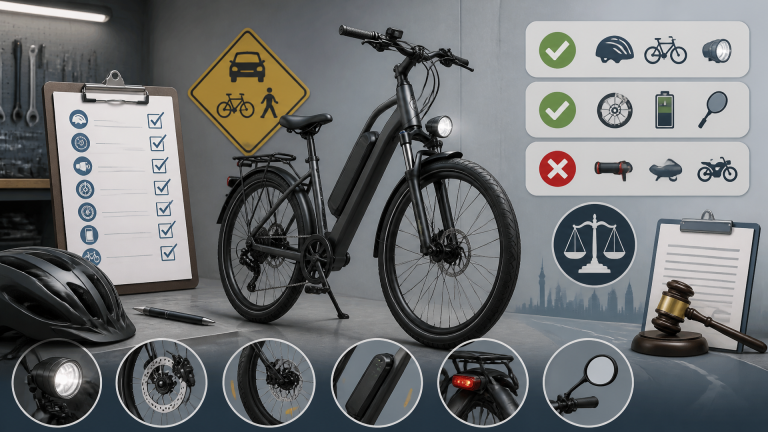
In the US, there’s no federal e-bike law. State laws vary, but a derestricted bike that exceeds 28 mph is typically classified as a moped or motorcycle. That means you need:
- Registration and plates
- A driver’s license (not just a bike license)
- Insurance
- DOT-approved helmet
- Working turn signals and mirrors
Riding a derestricted bike without these is operating an unregistered motor vehicle. In states like California, that’s a misdemeanor with fines up to $1,000 and potential vehicle impoundment. In Germany and other EU countries, riding a derestricted e-bike without a license and insurance is a criminal offense, not a traffic ticket.
The bigger risk is liability. If you’re in an accident on a derestricted bike, your insurance company will likely deny coverage. The other party’s lawyer will discover the modification during discovery. You’re not just uninsured—you’re knowingly operating an illegal vehicle. That shifts fault in civil cases regardless of who caused the crash.
Varies; verify locally is the honest answer for specific penalties. But the pattern across jurisdictions is consistent: derestricted bikes are treated as motor vehicles, and riders rarely have the paperwork to match.
The Failure Mode Nobody Warns You About: Controller Overheat
Here’s the specific failure mode that catches most derestricted riders: the controller overheats and enters thermal shutdown—usually at the worst possible moment.
E-bike controllers are rated for a maximum current draw. The factory speed limiter isn’t just a legal compliance feature; it’s a thermal management feature. When you bypass it, the motor keeps drawing high current at speeds the cooling system wasn’t designed for.
How to detect it early:
- Symptom 1: Power cuts out after 10–15 minutes of sustained high-speed riding, then returns after the bike cools
- Symptom 2: The controller casing feels hot to the touch (over 140°F / 60°C)
- Symptom 3: Reduced assist on hills that previously felt fine
- Symptom 4: Error codes on the display (varies by brand; check your manual)
The thermal shutdown is designed to protect the MOSFETs from catastrophic failure. It works—but it means your bike suddenly loses assist mid-ride. On a derestricted bike traveling at 30+ mph, that’s a handling change you didn’t plan for.
What to do if you’re already experiencing this:
1. Stop riding immediately and let the system cool
2. Check the controller’s rated continuous current vs. what your motor draws at high speed
3. Consider a controller upgrade with better heat sinks—but note this deepens the legal problem
4. If you’re on a hub motor bike, check whether the motor itself is overheating (hot axle, burning smell)
The fix isn’t “ride faster and hope.” It’s either accepting the limit or upgrading components—and understanding that each upgrade pushes you further from legal compliance.
Step-by-Step: How Derestricting Actually Works (For Informational Purposes)
This is the process on a typical hub-motor e-bike with a display-based limiter. It’s the most common configuration on bikes like KETELES Ebikes for Adults and other direct-to-consumer brands.
Before you start:
- Check your local laws first. This is not legal advice; it’s a mechanical explanation.
- Document your original settings so you can revert.
- Charge the battery fully—some controllers reset settings on low voltage.
The display menu method:
1. Turn the bike on with the display powered up
2. Press and hold the “Up” and “Down” buttons simultaneously for 5–10 seconds
3. Navigate to the “P” (parameter) menu
4. Find the wheel size setting (usually P03 or P05, varies by display)
5. Increase the wheel diameter by 2–3 inches from the actual value
6. Save and exit
The controller now thinks your wheel is larger than it is, so it calculates a lower speed than reality. At a true 22 mph, the display reads 20 mph, so the limiter never triggers.
The speed sensor method:
1. Locate the speed sensor on the rear wheel (small magnet on the spokes, sensor on the frame)
2. Move the magnet closer to the sensor—within 1–2mm
3. Some riders add a second magnet opposite the first
4. Test ride and check the display speed vs. a GPS app
This method is less reliable because the sensor may read double pulses and show an error.
The firmware method:
This requires brand-specific tools. For Bafang motors, you need the BESST tool and a Windows PC. For Bosch, third-party tuning chips like the SpeedBox plug into the motor connector. These are not reversible by resetting settings—they physically alter the motor’s programming.
Success check: Your bike exceeds the original cutoff speed with motor assist. Stop check: If you see error codes, unusual noises, or the motor cuts out, revert immediately.
What Happens to Your Range and Component Life
Derestricting doesn’t just change top speed—it changes the entire power curve. Here’s what actually happens:
Range drops 15–30%. At higher speeds, aerodynamic drag increases with the square of velocity. Going from 20 mph to 28 mph requires roughly double the power to maintain speed. Your battery drains faster, and you’ll hit low-voltage cutoff sooner.
Motor heat increases. Continuous operation above the rated RPM range stresses the windings. On geared hub motors, the internal clutch and gears wear faster. On mid-drive motors, the nylon gear can strip under sustained high-speed load.
Brakes become the weak point. Most e-bikes ship with mechanical disc brakes rated for 20 mph stopping distances. At 28+ mph, you need more stopping power. Upgrading to hydraulic brakes is the minimum responsible modification—but again, this doesn’t address the legal issue.
Tires matter more. Stock e-bike tires often have a speed rating around 25 mph. At sustained higher speeds, check the sidewall rating. If your tires aren’t rated for the speed you’re riding, you risk a blowout.
When Derestricting Makes Sense (And When It Doesn’t)
There are legitimate reasons to derestrict, and they’re almost all off-road.
Legitimate use cases:
- Private property where motor vehicle laws don’t apply
- Off-road trails that allow motorized bikes
- Racing or timed events on closed courses
- Research and development (testing components at higher speeds)
Illegitimate use cases:
- Commuting on public roads
- Bike lanes and multi-use paths
- Any situation where you’re mixing with pedestrians or regular cyclists
The distinction matters. A derestricted bike on private land is a non-issue. The same bike on a public bike path is a legal liability and a safety hazard to others.
If you’re derestricting for commuting, consider a different solution: buy a Class 3 bike (28 mph legal) or a moped-class vehicle with proper registration. The cost of a legal 28 mph e-bike is often comparable to the cost of derestricting a Class 1 bike plus the fines and insurance gaps you risk.
Common Mistakes People Make When Derestricting
Mistake 1: Assuming the display hack is undetectable. Law enforcement and insurance investigators know the wheel-size trick. A bike that displays 20 mph but GPS-tracks at 28 mph is obviously modified.
Mistake 2: Ignoring the battery’s discharge rate. Your battery has a maximum continuous discharge rating (usually printed on the label, e.g., “48V 20Ah with 40A BMS”). If your derestricted motor draws more current than the BMS allows, the battery shuts down or, worse, overheats.
Mistake 3: Not upgrading the brakes. This is the most dangerous omission. A 28 mph bike with 20 mph brakes is a crash waiting to happen.
Mistake 4: Derestricting a bike with a warranty. Most manufacturers void the warranty immediately upon detecting a modified controller. If your motor fails after derestricting, you’re paying out of pocket.
Mistake 5: Thinking “it’s just a bike.” At 28+ mph, you’re in motorcycle territory for stopping distance and crash forces. A standard bicycle helmet may not be sufficient. If you’re riding at these speeds, consider a helmet rated for higher-impact scenarios like the JARSH Commute Smart EBike Helmet with Lights, which is NTA-8776 certified for e-bike use up to 28 mph.
FAQ
Is derestricting an e-bike illegal?
In most jurisdictions, yes, if you ride on public roads. A derestricted bike no longer meets the legal definition of an e-bike and is typically classified as a motor vehicle, requiring registration, insurance, and a license.
Can the police tell if my e-bike is derestricted?
Often yes. They can check the display settings, measure your speed against the display reading, or use a diagnostic tool on the controller. The wheel-size hack is well-known.
Will derestricting damage my motor?
It can. Sustained operation above the rated speed increases heat and wear. Controllers may overheat and shut down, and motor internals may wear faster.
Does derestricting void my warranty?
Yes, in nearly all cases. Manufacturers can detect modified firmware or settings during diagnostics and will deny warranty claims.
Is there a legal way to get more speed?
Buy a Class 3 e-bike (28 mph legal in the US) or a moped-class vehicle with proper registration and insurance. That’s the only fully legal path to higher speeds on public roads.
What’s the safest derestriction method?
There isn’t one. All methods create legal and safety risks. If you must derestrict for off-road use, the display hack is the most reversible, but it still voids your warranty and changes the bike’s thermal profile.
The Trade-Offs Are Clear
Derestricting an e-bike is mechanically straightforward but legally and practically complex. The speed limiter exists for three reasons: legal classification, component protection, and rider safety. Bypassing it addresses the first constraint but creates problems in the other two areas.
If you’re riding on private land or closed courses, derestricting is a reasonable modification with clear trade-offs. If you’re riding on public roads, the legal exposure—unregistered vehicle, voided insurance, potential criminal charges—far outweighs the benefit of a few extra mph.
The honest recommendation: buy the right bike for the speed you need. A legal Class 3 e-bike gets you to 28 mph without any of the legal or mechanical risks. If you need more than that, you’re not looking for an e-bike—you’re looking for a motorcycle, and you should register it as one.