Bafang BBS01 vs BBS02 vs BBSHD: Complete Specs, Differences, and Compatibility Guide
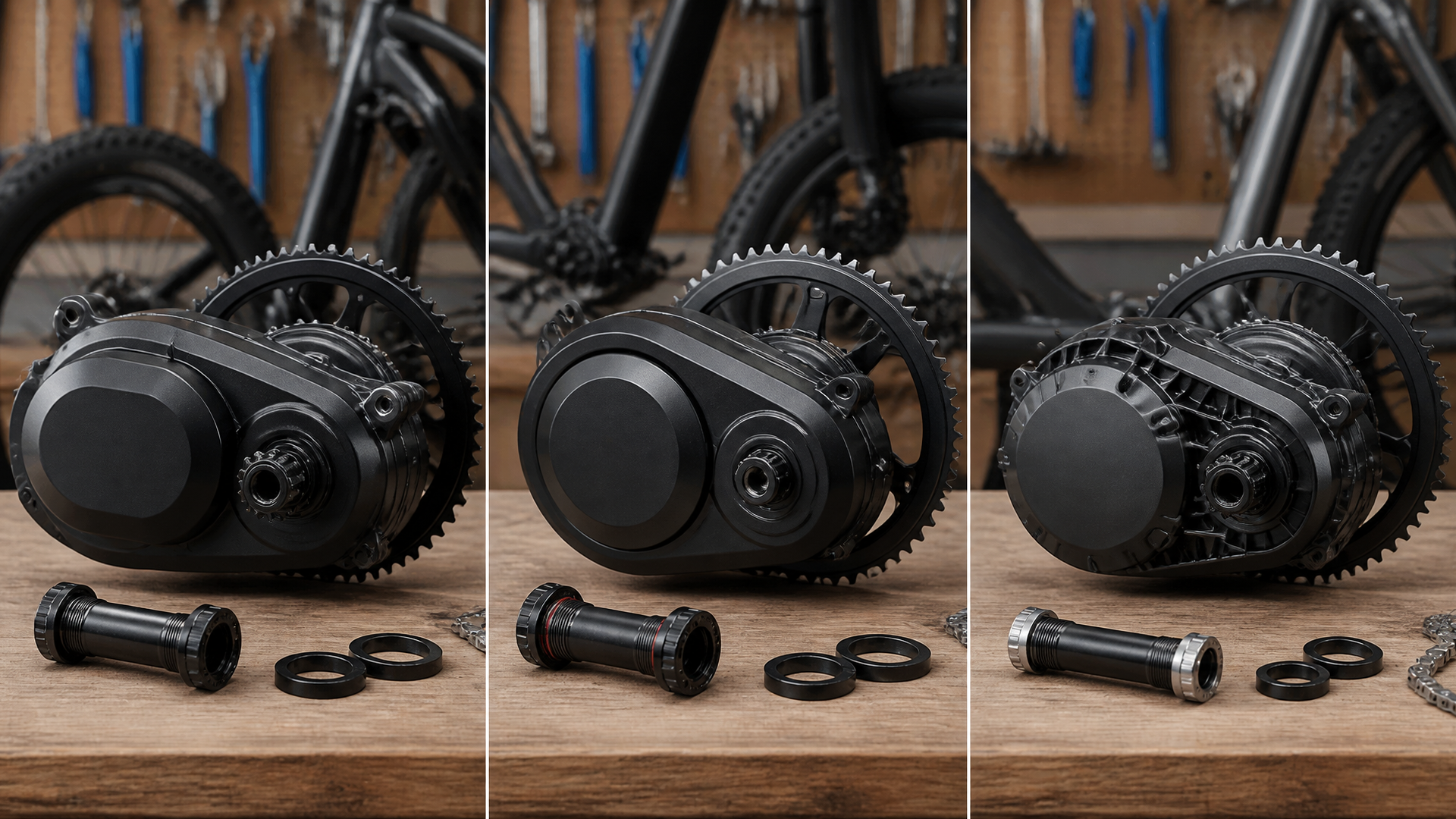
The right Bafang BBS motor comes down to three variables: power output, frame compatibility, and your realistic riding load. The BBS01 (250–350 W) suits legal pedal-assist on flat pavement. The BBS02 (500–750 W) handles commuting at 28 mph and moderate hills. The BBSHD (1000 W+) is the only choice for cargo loads, steep grades, or off-road abuse. If you think you might want more power next year, skip the smaller motors—buying the BBSHD now costs less than replacing an entire motor and controller later.
Spec Comparison
| Feature | BBS01 | BBS02 | BBSHD |
|---|---|---|---|
| <strong>Rated power</strong> | 250 W – 350 W | 500 W – 750 W | 1000 W |
| <strong>Peak torque</strong> | 80–100 Nm | 120–160 Nm | 160–180 Nm |
| <strong>Max controller current</strong> | 15–25 A (varies by region) | 25 A stock | 30 A stock (upgradeable to 35 A) |
| <strong>Battery voltage</strong> | 36 V only | 36 V or 48 V | 48 V or 52 V |
| <strong>Motor weight</strong> | ~3.8 kg | ~4.2 kg | ~5.8 kg |
| <strong>Bottom bracket size</strong> | 68–73 mm BSA | 68–73 mm BSA | 68–73 mm / 100 mm BSA |
| <strong>Throttle support</strong> | Yes (often restricted in firmware) | Yes (full) | Yes (full) |
| <strong>Typical price (motor + controller)</strong> | $350–$450 | $450–$550 | $550–$700 |
All three motors use the same speed-and-cadence pedal-assist sensor and compatible displays (C961, C965, DPC-18). Legal limits for throttle and wattage vary; verify locally before buying.
Power, Torque, and Thermal Limits You Will Actually Encounter
BBS01: Light and Legal
Who it fits: Riders who must stay under 250 W (EU) or 350 W (some US states). The nylon helical-cut gears keep the motor nearly silent.
Real-world torque: The BBS01 holds 12–15 mph on flat ground. On a 7% grade with a 200‑lb rider, the motor drags to 8–10 mph and the controller heats up within five minutes. At 350 W (a common firmware flash), the plastic gear softens over repeated climbs and may strip around 500 miles.
Thermal management: The factory controller paste is often thin. A $10 heatsink pad between the controller and housing drops peak temps by 10–15 °C and extends gear life. Without it, sustained 350 W use on a hot day can trigger thermal rollback and melt the nylon gear.
BBS02: The Commuter Sweet Spot
Who it fits: Riders who want 25–28 mph sustained speed on pavement or gentle off-road trails with hills up to 10% grade.
Real-world torque: A 48 V BBS02 pulls a 200‑lb rider up a 10% grade at 15 mph. The 36 V version loses about 20% of that torque—stick with 48 V if your frame and battery budget allow.
Thermal management: The steel gear handles bursts, but a two‑mile 8% climb at full throttle pushes the controller past 80 °C and triggers error code 21. Owners who add a heatsink pad plus an external heat sink on the housing avoid rollback on hot summer rides. Without these mods, the motor derates to ~400 W during extended climbs, cutting your speed to 10 mph.
BBSHD: Overbuilt for Heavy Duty
Who it fits: Cargo bikes, fat bikes, heavy riders (250+ lb), off-road trails with 15%+ grades, or anyone who refuses to worry about heat.
Real-world torque: The BBSHD climbs 20% grades at walking pace without thermal derating. Peak torque is available from a standstill, so you can start on a steep hill without pedal assist.
Thermal management: The larger stator and copper mass allow full power for 30+ minutes on steep trails. The factory heat sink is adequate for stock current. With a 35 A aftermarket controller, the motor still stays below 80 °C on a 90 °F day. No heatsink mod is needed unless you fit a 40 A controller and tackle long alpine climbs.
Decision rule: Flat pavement and legal power limits → BBS01. Speed and moderate hills → BBS02 at 48 V. Heavy loads, steep off-road, or zero thermal anxiety → BBSHD.
Frame, Bottom Bracket, and Battery Compatibility
Bottom Bracket Requirements
| Motor | BSA Thread (English/ISO) | Shell Width | Common Fits |
|---|---|---|---|
| BBS01 / BBS02 | 68–73 mm | Standard | Most mountain bikes, hybrid, touring frames with BSA BB |
| BBSHD | 68–73 mm (or 100 mm wide kit) | Standard + Wide | Fat bikes, tandems, cargo frames often need the 100 mm variant |
Verification step: Remove your bottom bracket and measure the shell width with a caliper. Most modern bikes are 68 mm (road) or 73 mm (MTB). Press-fit bottom brackets (PF30, BB86, BB90, BB92) cannot mount a BBS motor directly without an adapter that often misaligns and voids warranty.
Chainstay clearance: Measure from the center of the bottom bracket shell to the inside of the chainstay. Minimum clearance is 60 mm for BBSHD and 50 mm for BBS01/02. If your chainstays are tighter, the motor housing will rub the frame during pedaling. Road frames commonly have 45–50 mm clearance, which only fits the BBS01.
Battery Voltage and Connectors
- BBS01: 36 V only. Feeding 48 V blows the controller FETs within seconds—the motor locks up and needs a full controller replacement.
- BBS02: Available in 36 V or 48 V versions. The controller is voltage-specific. Buying a 36 V motor and later feeding 48 V destroys the controller instantly.
- BBSHD: Works with 48 V or 52 V. 52 V adds ~5% more top speed and torque (52 V × 1.4 = 72.8 V peak vs 48 V × 1.4 = 67.2 V). Use a Hailong-style battery case rated for 30 A continuous discharge; a 25 A BMS will trip under load and cut power mid-hill.
Mismatch warning: Do not mix voltages. A 48 V battery on a 36 V BBS01 shows no symptoms for a few pedal strokes, then the controller shorts and the motor seizes. Repair costs equal half the price of a new motor kit.
Which Motor Should You Buy?
Choose BBS01 if:
- Local laws limit power to 250 W (EU) or 350 W (some US states).
- Your rides are flat to gentle hills under 5% grade.
- You want the lightest, quietest option under $400 total motor cost.
- You do not plan to upgrade power later—resale value is low.
Choose BBS02 if:
- You commute 10–20 miles round trip and want sustained 25–28 mph.
- Your route includes moderate hills up to 10% grade and you weigh under 250 lb.
- You want a mid-price setup that fits standard 68–73 mm BB shells.
- You are comfortable adding a heatsink pad and monitoring controller temps.
Choose BBSHD if:
- You carry heavy loads (cargo, trailer, or rider over 250 lb).
- You ride steep off-road trails with 15%+ grades.
- You want maximum reliability—the BBSHD rarely hits thermal limits.
- You have a fat bike (100 mm BB kit available) or a frame with wide chainstay clearance.
Common Mistakes and Their Real-World Consequences
Skipping the programming cable. All three motors ship with conservative firmware that may set a 25 km/h speed limit or overly aggressive pedal assist. A $15–20 USB programming cable lets you adjust assist levels, speed limits, and current. Without it, you are stuck with the default tune.
Underestimating drivetrain wear. Mid-drives put full power through your chain and cassette. A BBSHD at full throttle can wear out a 7-speed freewheel in 300–500 miles—the chain stretches, then skips under load, causing a sudden pedal drop on climbs. Upgrade to an e-bike-rated chain (KMC Z1e or Shimano CN-E8000) and a 9-speed cassette with 11–36 T wide range. Plan to replace chain and cassette twice as often as on a standard bike.
Ignoring brake sensor installation. BBS kits include brake levers with motor cut-off sensors. If you keep your original brakes, you must wire inline hydraulic brake sensors (magnetic or reed type). Without them, squeezing the brakes while pedaling forces the motor against the brakes, overheating both the rotor and the controller. Real-world result: warped rotors and a fried controller within a few weeks of mountain riding.
Mismatched battery BMS. The BBSHD stock controller draws peaks up to 40 A for brief starts. A battery with a 25 A BMS will trip and cut power the first time
Explore This Topic
- Back to Informational
- Back to Truncation Fix
Related guides in this cluster:
- Bafang BBS vs M-Series Motors: Ultimate Guide to Specs, Compatibility, and Choosing
- Who Makes the Arrow 10 Electric Bike? Complete Guide to Manufacturer, Specs, and Review
- Are Biki Bikes Electric? Complete Guide to Honolulu Bike Share