TSDZ2B vs TSDZ8: Which Torque-Sensing Mid-Drive Motor Should You Choose? (2026)
Tongsheng’s TSDZ2B and TSDZ8 are two of the most popular torque-sensing mid-drive motors for DIY e-bike builds. Both measure how hard you pedal and match assist to your input, which makes them feel more like a natural extension of your legs than cadence-sensing systems. But they serve different riders, budgets, and build philosophies.
The TSDZ2B is a lightweight, proven, open-source-friendly option for commuters and casual riders. The TSDZ8 is a newer, more powerful platform with better thermal management and a sturdier housing, aimed at riders who push harder or carry more weight. If you want the most refined torque response and plan to ride aggressively, the TSDZ8 justifies its higher price. If you want a simple, well-documented build with a huge community behind it, the TSDZ2B is still the pragmatic choice.
Here’s how to decide.
Why Torque Sensing Matters
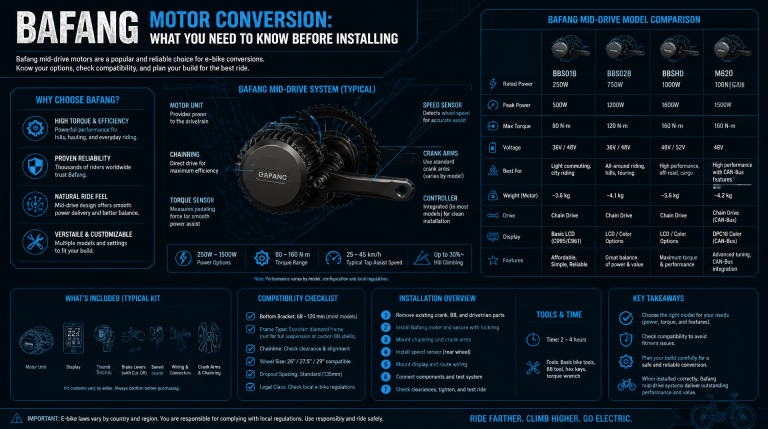
Before diving into the specs, it’s worth understanding what makes Tongsheng different from the dominant Bafang mid-drive options.
Bafang’s BBS02 and BBSHD use cadence sensing: they deliver a preset amount of power when the cranks turn, regardless of how hard you push. That works fine for throttle-heavy riding, but it can feel jerky or “all or nothing” when you’re pedaling through technical terrain.
Torque sensors, by contrast, measure the force you apply to the pedals via a strain gauge in the bottom bracket. The motor output scales with your effort. Push harder, get more assist. Ease off, get less. The result is a ride that feels like a very strong set of legs rather than a switch you flip.
The TSDZ2B and TSDZ8 are the two main torque-sensing options from Tongsheng. Both use the same fundamental technology, but they differ significantly in execution.
Spec Comparison: TSDZ2B vs TSDZ8
| Spec | TSDZ2B | TSDZ8 |
|---|---|---|
| Rated power | 250W / 350W / 500W versions | 500W / 750W versions |
| Max torque (crank) | ~80–90 Nm (version-dependent) | ~100–120 Nm (version-dependent) |
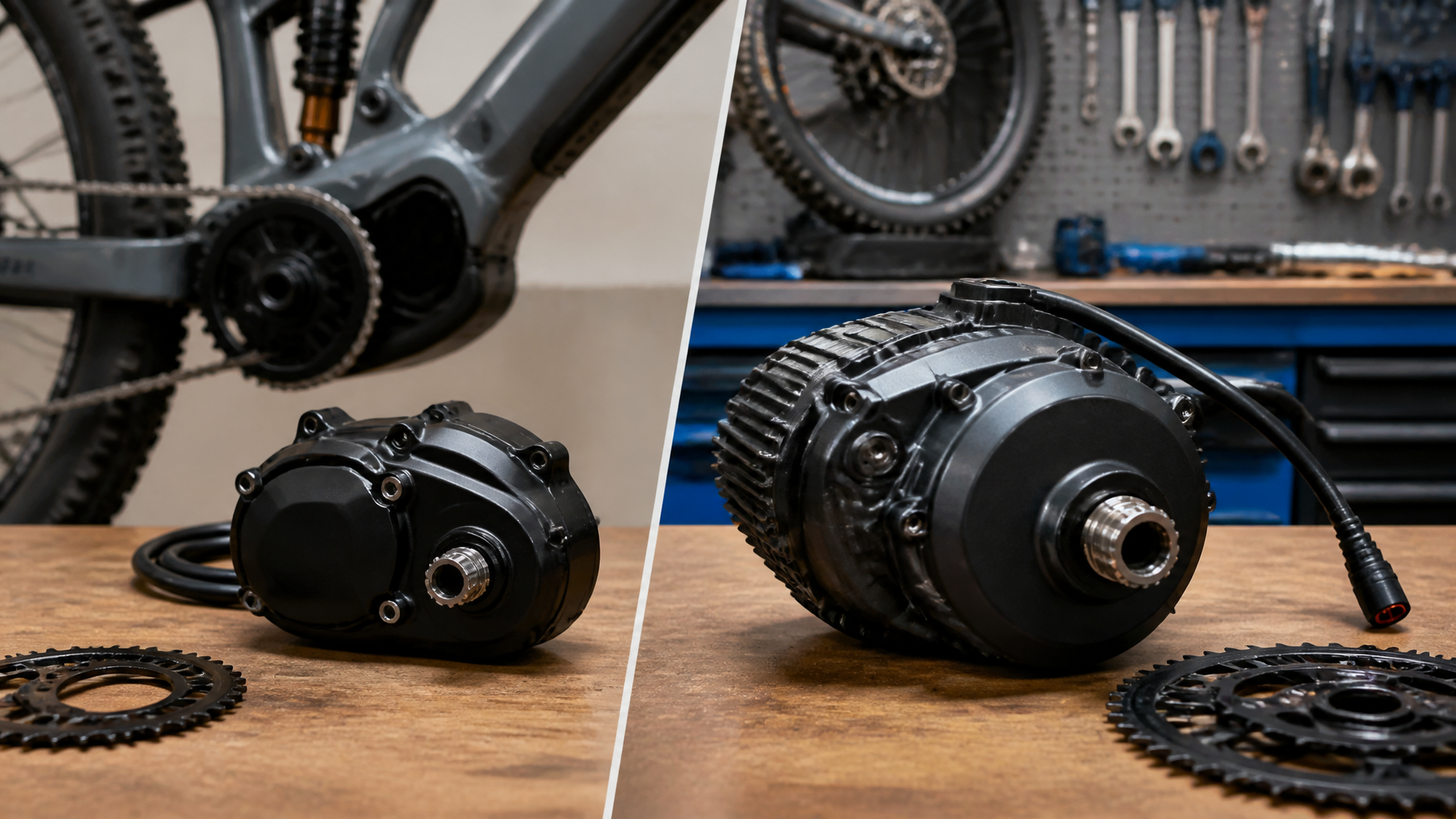
| Weight | ~3.5–4.2 kg (8–9.3 lb) | ~5.5–6.0 kg (12–13.2 lb) |
| Bottom bracket width | 68–73 mm standard; 100 mm fat-bike option | 68–73 mm standard; 100 mm option |
| Display options | VLCD5, VLCD6, VLCD7, 860C, OSF-compatible | VLCD7, 860C, Tongsheng TSDZ8 display, OSF-compatible |
| Thermal management | Passive; known to overheat on steep climbs | Improved heat sink design, better sustained output |
| Housing | Aluminum, two-piece design | One-piece forged housing, thicker casing |
| Open-source firmware | Yes (extensive OSF community) | Yes (newer, smaller community) |
| Typical kit price | $350–$450 | $500–$650 |
Key takeaway: The TSDZ8 is heavier, stronger, and built to sustain power longer. The TSDZ2B is lighter, cheaper, and has a much larger support ecosystem.
TSDZ2B: The Proven Workhorse
The TSDZ2B is the updated version of the original TSDZ2, which has been on the market for years. The “B” revision addressed some of the original’s weaknesses: it added a better thermal sensor, improved the nylon gear durability, and changed the controller layout. It’s not a redesign — it’s a refinement.
What the TSDZ2B does well
Weight and handling. At roughly 4 kg, the TSDZ2B is one of the lightest mid-drive motors with torque sensing. On a lightweight commuter or a touring bike, you’ll notice the difference. The bike handles more like a conventional bicycle when the assist is off or at low levels.
Open-source firmware (OSF). This is the TSDZ2B’s biggest advantage. The Open Source Firmware project has been developing custom firmware for the TSDZ2 series for years. You can adjust assist levels, throttle response, field weakening, and even add features like a virtual e-bike display. The community is large, active, and well-documented. If you’re the type of person who likes to tune every parameter, this is a major draw.
Cost. A complete TSDZ2B kit — motor, display, wiring, and often a battery — runs significantly less than the TSDZ8. For a budget build, the savings can go toward a better battery or higher-quality components elsewhere.
Proven reliability. The TSDZ2B has been installed on thousands of bikes. Common failure points are known and documented: the nylon gear can strip under extreme torque, and the internal controller can overheat on long climbs. But for typical commuting and recreational riding, it’s a dependable unit.
Where the TSDZ2B falls short
Thermal limits. This is the TSDZ2B’s most discussed weakness. On sustained steep climbs, especially with a heavier rider or cargo load, the motor can overheat and reduce assist or shut down entirely. The stock thermal sensor is conservative. OSF users can adjust temperature limits, but that’s a workaround, not a fix.
Torque output. The TSDZ2B’s max torque is lower than the TSDZ8’s. For a 250 lb rider on a 15% grade, the TSDZ2B will struggle where the TSDZ8 keeps pulling.
Housing durability. The two-piece aluminum housing is adequate, but the TSDZ8’s one-piece forged design is noticeably stiffer. If you ride rough trails or crash, the TSDZ2B’s casing is more likely to show damage.
TSDZ8: The Heavier Hitter
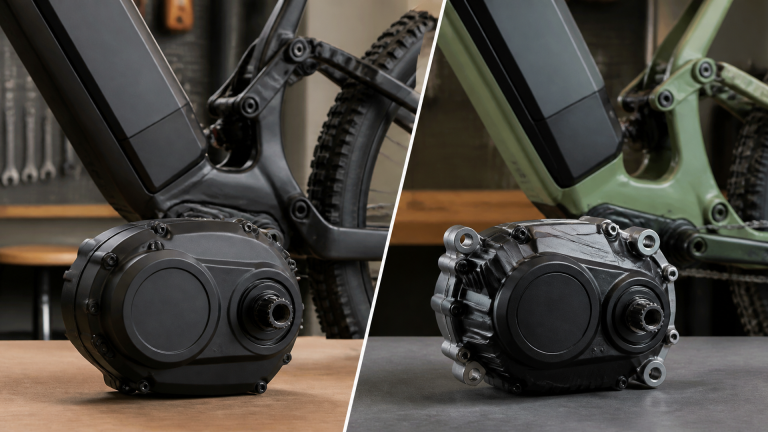
The TSDZ8 is Tongsheng’s answer to the TSDZ2B’s limitations. It’s a larger motor with a more robust internal layout, better cooling, and higher torque output. It’s not a drop-in replacement — the mounting points and dimensions differ — so you need to make sure your frame has clearance.
What the TSDZ8 does well
Sustained power. The TSDZ8’s improved heat sink design means it can hold higher power output for longer. On a 20-minute climb that would thermal-throttle a TSDZ2B, the TSDZ8 keeps delivering consistent assist. This is the single biggest reason to choose it.
Torque and acceleration. With roughly 20–30% more crank torque, the TSDZ8 is noticeably stronger off the line and on steep grades. If you’re a heavier rider, carry cargo, or live in a hilly area, the extra torque translates directly to less effort.
Build quality. The one-piece forged housing is stiffer and better sealed. The internal wiring is better organized, and the motor unit feels more substantial. It’s a more premium product.
Better stock display options. The TSDZ8 ships with newer displays that have more readable screens and better button ergonomics. The VLCD7 and 860C options are both solid.
Where the TSDZ8 falls short
Weight. At 5.5–6 kg, the TSDZ8 is roughly 40% heavier than the TSDZ2B. On a bike you need to carry up stairs or lift onto a rack, that’s a real difference.
Price. The TSDZ8 kit costs $100–$200 more. For some budgets, that’s a dealbreaker.
Younger OSF ecosystem. The TSDZ8 is newer, and the open-source firmware community is smaller. Development is active, but you won’t find as many tutorials, pre-built configurations, or troubleshooting threads. If you’re not comfortable being an early adopter, this matters.
Frame clearance. The TSDZ8 is a bigger motor. On some frames — particularly full-suspension bikes with tight bottom bracket areas — it may not fit. Always check the motor dimensions against your frame before ordering.
Decision Rule: Which One Should You Buy?
Use these criteria to make the call. They’re not about which motor is “better” — they’re about which motor fits your constraints.
Choose the TSDZ2B if:
- Your budget is under $450 for the complete kit
- You want to run open-source firmware and customize the assist curve
- Your bike is a commuter, light tourer, or recreational ride
- You weigh under 220 lb and don’t regularly tackle grades over 10%
- You want a lighter bike that handles like a conventional bicycle
- You value a large community for troubleshooting and support
Choose the TSDZ8 if:
- You weigh over 220 lb or carry cargo regularly
- You ride sustained climbs or live in a hilly area
- You want maximum torque for off-road or steep pavement
- You’re willing to pay $500–$650 for a more robust motor
- You prefer a stiffer, better-sealed housing for rough conditions
- You’re okay with a smaller open-source community (or plan to use stock firmware)
The one criterion that flips the recommendation: your local terrain. If your daily ride includes a climb longer than 10 minutes at a grade above 8%, the TSDZ2B’s thermal limits will frustrate you. The TSDZ8 handles that scenario without breaking a sweat. If your rides are flat or rolling, the TSDZ2B’s lighter weight and lower cost make it the smarter buy.
Installation Considerations for Both Motors
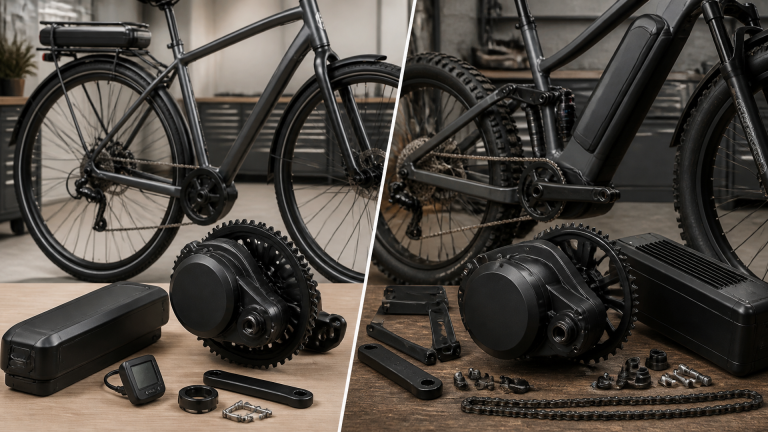
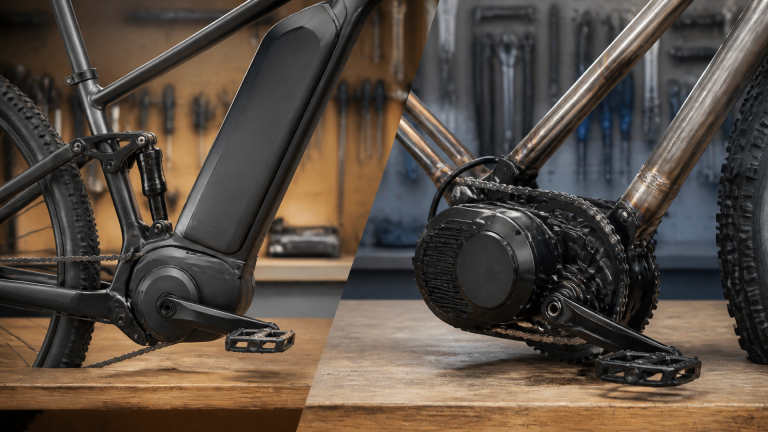
Both motors require a compatible bottom bracket shell (68–73 mm is standard; 100 mm fat-bike versions exist for both). You’ll need to remove your existing cranks and bottom bracket, then install the motor’s integrated unit. This is a doable DIY job with basic tools, but there are a few things to watch.
Chainline. Mid-drive motors put more lateral stress on the chain than hub motors. Make sure your chainring and rear cassette are aligned. A misaligned chainline causes rapid wear and poor shifting.
Torque arm. Tongsheng motors are typically installed with anti-rotation washers, but on high-torque setups, an additional torque arm is recommended. This is especially true for the TSDZ8, which delivers more force to the frame.
Battery compatibility. Both motors run on 36V or 48V systems. Check your battery’s continuous discharge rating — a 750W motor at 48V draws roughly 15–16A, so your battery should be rated for at least 20A continuous to avoid voltage sag.
Display wiring. The TSDZ2B and TSDZ8 use different display connectors in some configurations. If you’re buying a kit, make sure the display is included or explicitly compatible.
Hub Motor vs Mid-Drive: The Broader Question
If you’re comparing Tongsheng motors, you’ve likely also considered hub motors. Here’s the practical difference.
Hub motors are simpler, cheaper, and more reliable. The motor lives in the rear wheel, so it doesn’t stress your drivetrain. They’re great for flat commutes and riders who want a “set and forget” system. The downside: they add unsprung weight to the rear wheel, and they don’t multiply your pedaling force through the gears.
Mid-drive motors like the TSDZ2B and TSDZ8 drive the cranks, which means your bike’s gears work with the motor. On hills, you can shift to a lower gear and let the motor spin faster while you pedal at a comfortable cadence. This makes mid-drives more efficient on varied terrain and gives better range per watt-hour.
The trade-off is mechanical complexity. Mid-drives put more stress on your chain, cassette, and chainring. You’ll replace drivetrain parts more often. And if the motor fails, it’s a more involved repair than swapping a hub motor wheel.
For most riders doing mixed terrain, a mid-drive is the better choice. For pure flat-weather commuting with minimal maintenance desire, a hub motor is hard to beat.
FAQ
What are the key differences between the Tongsheng TSDZ2B and TSDZ8 motors?
The TSDZ8 is a larger, heavier motor with roughly 20–30% more torque, better thermal management for sustained climbs, and a stiffer one-piece housing. The TSDZ2B is lighter, cheaper, and has a much larger open-source firmware community. The TSDZ8 costs more and requires more frame clearance; the TSDZ2B is the budget-friendly, well-documented option.
Is a hub motor better than a mid drive?
It depends on your use case. Hub motors are simpler, cheaper, and require less drivetrain maintenance. Mid-drive motors like the TSDZ2B and TSDZ8 provide better hill-climbing efficiency, use your bike’s gears to multiply torque, and deliver a more natural pedaling feel via torque sensing. For varied terrain and longer rides, mid-drive is generally the better choice. For flat commutes with minimal maintenance goals, a hub motor is a strong contender.
Can I use open-source firmware on both motors?
Yes, but the ecosystems differ. The TSDZ2B has a mature, well-documented Open Source Firmware project with years of community development. The TSDZ8’s OSF support is newer and less extensive, though active development is ongoing. If custom firmware is a priority, the TSDZ2B is the safer bet.
Which motor is better for a heavy rider?
The TSDZ8. Its higher torque output and better thermal management make it more capable of handling the additional load, especially on climbs. A heavier rider will push the TSDZ2B closer to its thermal limits more quickly.
Do I need a special frame for either motor?
Both motors fit standard 68–73 mm bottom bracket shells. The TSDZ8 is physically larger, so you need to verify frame clearance around the bottom bracket area. Full-suspension frames with tight linkage designs may not accommodate it. The TSDZ2B is smaller and fits more frames.
Final Recommendation
If you’re building a commuter or light tourer on a budget, the TSDZ2B is the rational choice. It’s lighter, cheaper, and backed by a massive community that has solved most installation and tuning problems. The thermal limitations only matter if you ride sustained steep climbs — and if you do, you already know it.
If you’re a heavier rider, live in a hilly area, or plan to ride aggressively off-road, the TSDZ8’s extra torque and thermal headroom are worth the premium. The weight penalty is real, but the motor’s ability to sustain power without throttling is the difference between a frustrating ride and an enjoyable one.
There’s no universal winner here. Match the motor to your terrain, your weight, and your willingness to tinker. Do that, and either choice will serve you well for thousands of miles.