
Why Isn’t Your Electric Bike Display Working? Troubleshooting Guide
Safety first: Before you touch any wires or connectors, turn off the battery and remove it from the bike. If the display or wiring shows signs of melted plastic, burns, or a burnt smell, stop immediately and take the bike to a qualified e-bike technician. High-voltage DC systems can arc or short even after the battery is removed if stored charge remains.
Your electric bike display is dead, blank, or flickering. The most likely cause is a loose or corroded connector between the display and the main controller. A close second is a tripped internal fuse or a battery that still has enough voltage to power the motor but not the display. The fixes below are ordered from simplest to more involved, so start with the quick checks and work your way down.
Start with These Quick Checks
1. Confirm the battery is charged and properly seated. A nearly dead battery may still spin the motor briefly but can’t run the display. Remove the battery, clean the contact rails with a dry cloth, reinsert it fully, and make sure it clicks into place.
If the display flickers or shows dim partial lines after reseating the battery: The contacts likely have corrosion or the battery is too low. Move to the connector inspection below.
2. Check the display’s power-on sequence. Some displays require a long press (2–3 seconds) of the power button, not a quick tap. Try holding the button while the battery is connected.
If the display responds to a long press but shows erratic symbols (ghosted speed or random assist mode): The button may be stuck or the display’s internal controller is glitching—try the reset in the firmware steps before replacing anything.
3. Inspect the main cable connector. The display cable usually plugs into the handlebar mount or a short pigtail that runs to the controller. Unplug and replug this connector firmly. Look for bent pins, dirt, or moisture.
If the display briefly lights up when you wiggle the cable: The internal wire is broken near the connector. That cable needs replacement—a simple connector fix won’t solve it.
If the display still shows nothing after these three steps, move on to the common causes below.
Loose or Corroded Connectors (Most Common)
Vibration, rain, and road grit loosen or corrode the contacts between the display cable and the main harness connector.
- Fix: Unplug every connector between the display and the controller (display-to-mount, mount-to-main harness, and main harness-to-controller). Inspect each pin for green or white corrosion. Clean corrosion with electrical contact cleaner and a plastic bristle brush. Let dry, then apply a dab of dielectric grease before reconnecting.
- If you see heavy corrosion (green fuzz or white powder) inside a connector: The wiring may be water-damaged deeper in the harness—see the water damage section below.
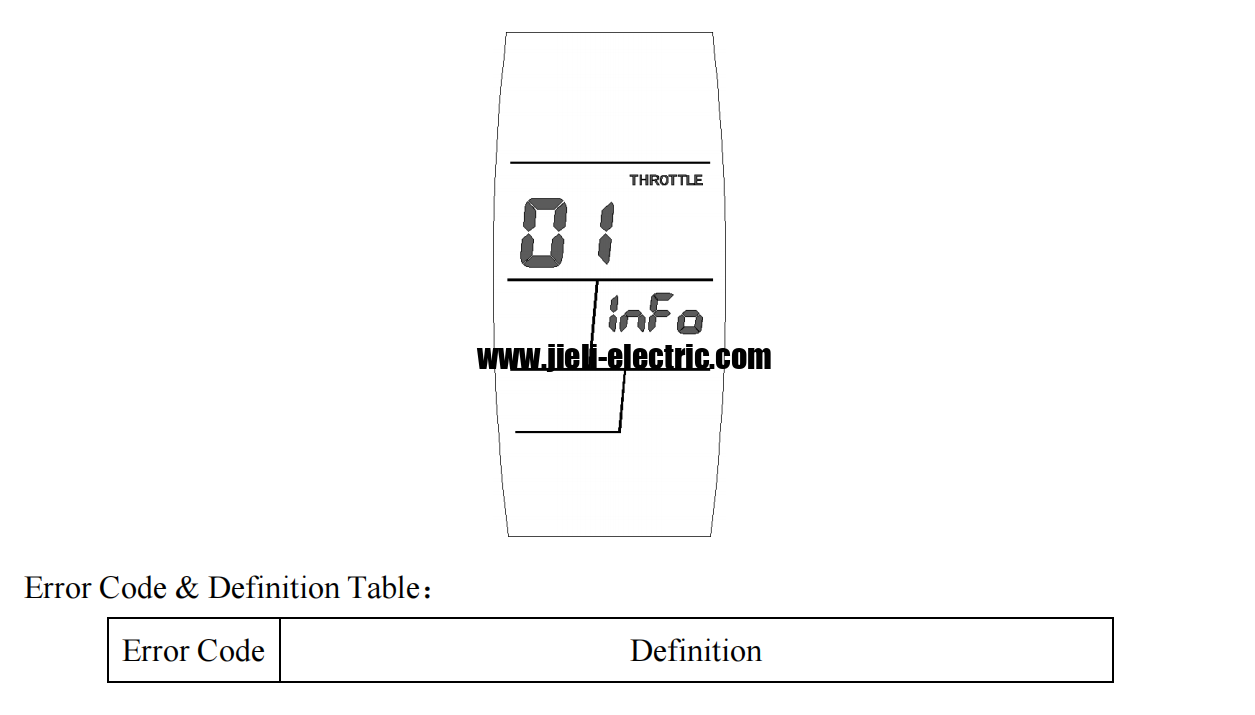
After cleaning and reconnecting, test the display. If it works but an error code (like “Error 30” on some Bafang systems) remains, the controller side may still be corroded. You’ll need to open the controller housing and check that connector too.
Blown Internal Fuse in the Battery or Controller
Most e-bike batteries have a resettable fuse or a replaceable blade fuse inside the battery casing or in the controller housing. A momentary short (e.g., from a wet display port) can blow this fuse, killing power to the display while the main motor circuit remains live.
Battery Fuse
Locate the fuse holder on your battery (often visible as a small tab or cap). Pull the fuse and inspect the metal element. A melted or broken wire means it’s blown. Replace with the exact same amperage and type (usually 5A, 10A, or 15A blade fuse). Do not use a higher-rated fuse.
If the fuse looks fine but you still get no display power: Use a multimeter to test continuity across the fuse. Some hairline breaks aren’t visible to the eye. No continuity = replace.
Controller Fuse
Open the controller compartment (usually under the battery cradle or inside the frame). Look for a blade fuse inline with the display power wire. Test with a multimeter or visually inspect. Replace if blown.
If the replacement fuse blows the moment you reconnect the battery: The controller has an internal short. Stop here—do not keep replacing fuses. Take the bike to a shop.
Water Damage
Rain, pressure washing, or condensation can short the display’s circuit board or corrode the internal ribbon cable. Symptoms include a blank screen, partial rows of pixels, or erratic flashing.
For Mild Moisture
Remove the display from its mount. Place it in a sealed bag with silica gel packets or uncooked rice for 24 hours. Do not use heat (hair dryer, oven)—that can melt plastic components.
After drying, if the display works but shows random digits or resets every few minutes: The moisture has likely damaged the internal ribbon cable. Even a partially working display will fail again soon—plan for a replacement.
For Visible Corrosion
If you see rust or white residue on the display’s back plate or circuit board, the display is likely damaged beyond home repair. Replace the display unit.
If the corrosion is limited to the connector port on the display (not the board itself): Try cleaning the port with contact cleaner and a toothpick. If the display works after cleaning, seal the port with dielectric grease to prevent recurrence.
Model-Specific Note: Bosch, Shimano, Brose
These premium systems often have sealed displays that are water-resistant but not waterproof. If water enters the connector port, the entire display unit may need replacement. Do not attempt to open the sealed housing. A replacement will require dealer pairing for CAN bus models.
Firmware or Glitch Lock-Up
The display’s microcontroller can crash due to a power surge or static discharge, making it appear completely dead.
Soft Reset
On most displays, remove the battery for 30 seconds, then reconnect. For displays with a backup internal battery (like some Bafang units), remove the display from the mount, wait one minute, and reattach.
If the display powers on after a reset but the settings are lost (wheel size, assist levels, backlight): That’s normal—re-enter them from the manual. If the display resets itself again within a few rides, the controller’s power capacitor may be failing, causing a voltage drop every time the motor draws current. This requires a shop diagnosis.
Models with a Reset Button
Check your manual for a pinhole reset button on the back of the display. Press with a paperclip for 5 seconds while the battery is connected.
If the reset button doesn’t help and the display still shows nothing: Move to hardware failure below. A crashed microcontroller that won’t reset is typically a dead unit.
Dead Display Unit (Hardware Failure)
If all connectors are clean, the fuse is intact, the battery is fully charged, and a reset did nothing, the display itself has failed. This is common after a drop, a crash, or prolonged water exposure.
What You Can Do
Order a replacement display that matches your controller’s protocol (e.g., KT-LCD3, Bafang DP C10, or the specific OEM part). Swap the cable and mount—usually a 5-minute job. Label the wires if you remove the old display harness.
After installing the new display, if it stays blank: The replacement unit may be incompatible or the controller’s display port is dead. Test the new display on a friend’s bike with the same controller to confirm.
What Requires a Shop
If your e-bike uses a CAN bus system (found on many 2023+ mid-drive bikes), the display is paired to the controller via software. A replacement must be programmed by a dealer. Check your manual: if it says “display must be paired at authorized service center,” do not attempt self-replacement. If you ignore this and a DIY replacement doesn’t work, the controller may enter a locked state that a shop can still reset, but you’ll pay a diagnostic fee.
Red Flags – When to Stop and Seek Professional Help
- Burned or melted wiring near the display connector or controller. This indicates a short that will fry a new display too.
- Display works when you wiggle the cable. The wire inside the insulation is broken. Repair requires soldering or a new harness—not a connector fix.
- Multiple blown fuses in a row. The controller or motor driver likely has an internal short.
- Display lights up but no data (zero speed, no battery bars). The communication line (usually yellow or green wire) is open, or the controller is damaged. A shop with a diagnostic tool can test the controller’s output.
If you own a multimeter and feel comfortable, you can test the communication wire between display and controller. With battery on, you should see a fluctuating voltage (around 3–5V) on the data line. A steady 0V or constant full voltage means the controller isn’t sending data.
FAQ
Can I replace my e-bike display with any generic model?
Only if your controller and display use the same communication protocol (UART, CAN bus, or manufacturer-specific). Check the pinout diagram in your manual. Using the wrong display can damage the controller.
How do I test if the display is getting power?
With the display connected and battery on, measure DC voltage between the red and black wires at the display connector. You should see battery voltage (36V, 48V, etc.). If you see 0V, the fault is in the harness, battery, or controller, not the display.
Will a dead display drain my battery?
No. A dead display that shows nothing will not draw current because it has no power. But a display that stays on dimly with no readout may still drain the battery slowly—disconnect it when parked if you notice overnight battery drain.